Despite laws in place, predictable emergencies are still being exploited, revealing gaps in planning and accountability
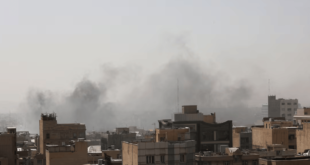
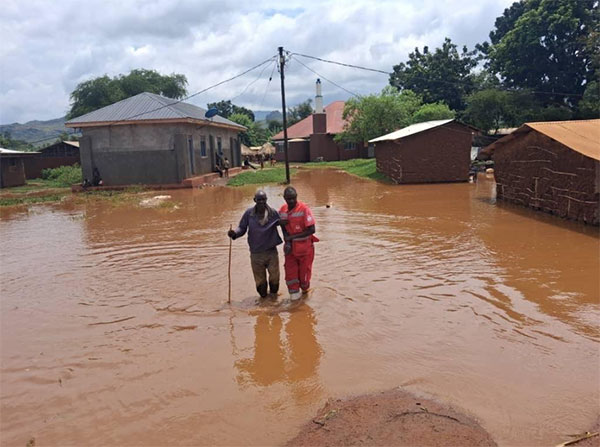
Kampala, Uganda | RONALD MUSOKE | In Uganda, disasters ranging from seasonal floods, landslides, to public health emergencies—rarely spare ordinary citizens. Families displaced by floods can spend weeks in makeshift shelters, while overstretched health facilities struggle with dwindling medical supplies. Yet, even when emergency funds are allocated, aid often fails to reach the people who need it most. Where funds are released for infrastructure refurbishment as was the case when the River Katonga bridge along the Kampala-Masaka Highway collapsed in May 2023 under the weight of a deluge, procurement can drag on for months.
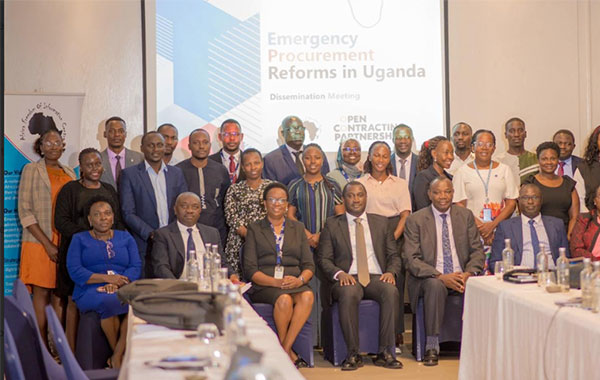
On Feb. 18, researchers, regulators, civil society actors, and development partners convened under the auspices of the Africa Freedom of Information Centre (AFIC) in Kampala to analyze why this remains the case in Uganda. At the centre of the discussions were new findings from Prof. Sabiti Makara of Kabale University.
His study under the Anti-Corruption Evidence (ACE) Programme exposes systemic weaknesses in Uganda’s emergency procurement system. Prof. Makara’s research, “Crisis Emergencies, State Responses, and Windows of Corruption: Voices from the Grassroots,” analyzed decades of procurement-related scandals, including the Global Fund HIV/AIDS scandal of 2005, the post-conflict Peace, Recovery and Development Plan scandal of 2007, the COVID-19 emergency procurements in 2021, and the more recent Karamoja Community Empowerment Project which saw senior government officials, including ministers implicated in the stealing of roofing sheets (Mabaati scandal). The patterns, he said, are familiar: inflated contract prices, weak documentation, underperforming projects, bribery, and selective enforcement of accountability.
As such, the consequences have been severe. Thousands, if not millions, of patients were left without access to HIV/AIDS, malaria, and tuberculosis medications following the theft and mismanagement of over US$4.5 million in Global Fund grants in 2005 as the tendering processes were bypassed. An inquiry revealed the scale of the fraud and led to calls for the prosecution of then-Health Minister, Jim Muhwezi, and his deputies (Mike Mukula and Alex Kamugisha). The programme was immediately suspended but it was later reinstated following a commission of inquiry and subsequent reforms.
Similarly, in northern Uganda, the multi-million dollar infrastructure projects which were initiated by the government to resuscitate the regional economy following years of LRA insurgency, were never completed, as collusion between government officials and contractors led to diversion of funds.
In the Karamoja sub region of northeastern Uganda, residents continue to suffer from failed aid programmes. In 2023, over 14,500 pre-painted roofing sheets meant for impoverished communities were diverted. High-ranking officials including ministers, were implicated, but only three were formally charged: former Minister for Karamoja Affairs, Mary Goretti Kitutu, State Minister for Karamoja Affairs, Agnes Nandutu, and State Minister for Finance, Amos Lugoloobi. Charges against Lugoloobi were later withdrawn by the DPP on Nov. 11, 2025, after his trial had reached the defence stage.
Furthemore, the Coronavirus pandemic (COVID-19) relief programmes also faltered in 2021. Food aid intended for destitute households affected by lockdowns was over priced, stolen or never reached the actual beneficiairies, leaving vulnerable communities on the brink of starvation.
In response, the government arrested and preferred charges against four senior officials in the Office of the Prime Minister (OPM) over procurement fraud. The accused included; then-Permanent Secretary Christine Guwatudde; then-Under Secretary and Accounting Officer; Joel Wanjala, then-Commissioner for Disaster Preparedness, Martin Owor; and then-Assistant Commissioner for procurement, Fred Lutimba.
A 2019/2020 Auditor General’s report underscored the scale of the problem. The report noted that, of the Shs 311 billion that was allocated to Ministries, Department and Agencies and districts for COVID-19 interventions, authorities were unable to verify proper utilization. The report found that 25 entities conducted COVID-19-related procurements worth Shs 143.84 billion without complying with procurement rules. Common irregularities included excessive use of direct procurement, unsigned contracts, late delivery of goods, prepayments, and failure to involve contracts committees.
Experts cite systemic weaknesses in enforcement of emergency procurement regulations as drivers of corruption. In his research, Prof. Makara used a “Rational Choice model” to argue that when officials perceive minimal risk for abuse, crises become profitable. Emergency clauses in procurement law, he says, allow bypassing standard competitive procedures, creating fertile ground for collusion and bribery. “Once networks form, the moral cost of corruption decreases, normalizing exploitative behaviour as part of the governance business,” Prof Makara said, during the dissemination of his research findings.
Legal frameworks and institutional oversight
Despite these historical failures, Uganda has made strides in codifying emergency procurement rules. Section 2 of the PPDA Act, Cap 205, defines emergencies as urgent and unforeseeable situations, explicitly prohibiting classification of predictable crises caused by poor planning, deliberate delay, or administrative negligence.
Hilda Mwesigwa, the Manager for Performance Monitoring at PPDA, the government agency in charge of public procurement and disposal of public assets in Uganda explained the nuance: “That phrase — not caused by dilatory conduct — is critical,” she said. “The law draws a clear line between genuine emergencies and crises created by poor planning or delayed decision-making. Move fast, yes, but document and account later.”
Mwesigwa noted that the procurement law permits accounting officers to sign contracts without prior committee approval if committees cannot meet due to an emergency, with mandatory reporting to PPDA within ten working days. Regulation 7 of the 2023 Procurement Rules reinforces the principle that emergencies do not eliminate competition: maximum practicable competition must still be sought.
Still, Mwesigwa highlighted ongoing compliance challenges. She mentioned inadequate documentation, lack of justification for recurring emergencies, and poor contract management as persistent issues. She cited the emergency refurbishment of the River Katonga bridge along the Kampala-Masaka Highway, which despite being procured under direct procurement, it took 166 working days from initiation to signing. Mwesiga wondered whether that procurement still qualified to be an emergency.
Sectoral analysis and trends
Data presented at the workshop by Lydia Kwesiga, the Manager of Performance Monitoring in charge of Compliance at PPDA, showed that emergency procurement remains a small fraction of total procurement but is concentrated in predictable sectors such as infrastructure, health, and disaster relief.
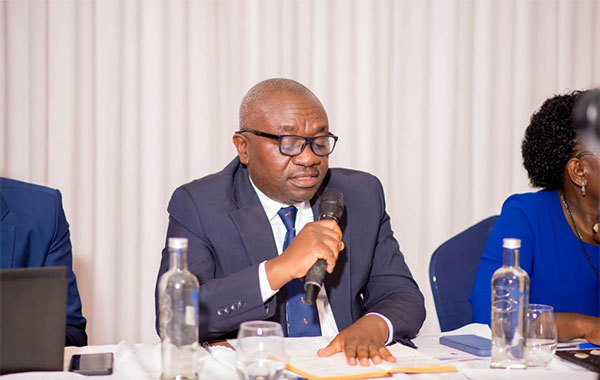
Between 2019 and 2025, for instance, the rate of reported emergencies ranged from 0.2% to 0.35% of total procurement. Key reporting entities included KCCA, the Bank of Uganda, National Water and Sewerage Corporation, UNRA, and the Ministry of Education.
Yet, in financial terms, the Office of the Prime Minister spent Shs 342 billion on emergency procurement in 2024–2025, with allocations spanning health (34%), disasters and humanitarian relief (22%), infrastructure (18%), security and defence (14%), and other sectors including education and agriculture (12%).
Kwesiga also highlighted both best practices, such as the use of framework agreements for internally displaced persons, and areas for improvement, particularly recurring emergencies that could have been planned for. “The law has put into place measures of handling emergency projects but one of the key things that we note is that the guideline explains that the emergency must not be caused by poor planning, deliberate delay or administrative negligence,” she said.
Kwesiga said PPDA’s analyis came to the realisation that “fabricated emergencies” used to happen a lot around June (towards the end of the financial year). “So many entities would write to PDDA creating emergencies, because they do not want to return money to the Consolidated Fund. She said PPDA had to come out to explain to the government ministries, departments and agencies what constitutes an emergency.
“We are fully aware of the emergencies that are taking place in our country now. We know that it will rain and the roads will be impassable, we are aware. When you look at the trend, they show you that at this stage, the country knows what emergencies to expect.”
“For us at PPDA, we feel that some of these cases now are foreseeable needs, because if we have been having to do that year in, year out, why wouldn’t you come up with frameworks such that you don’t have to handle that as an emergency? We are saying entities should plan ahead to mitigate the risks in emergencies,” she said.
Predicting emergencies
Edwin Muhumuza, the Head of Africa at Open Contracting Partnership (OCP), an independent non-profit that works in over 50 countries to ensure public money is spent openly, fairly and effectively on public contracts, emphasized that many emergencies in Uganda are predictable, ranging from seasonal floods and landslides to recurring infrastructure failures. “At the heart of every emergency is procurement,” Muhumuza observed. “Policy is translated into services, supplies, and infrastructure. But most emergencies cannot be prepared for during the emergency. Planning must happen before.”
He criticized the repeated use of direct procurement waivers to justify predictable crises. “If bridges are washed away every rainy season, that should stop being an emergency. We should have framework agreements in place. Waiting for a crisis and then waiving safeguards undermines procurement rules and invites abuse,” he said.
Muhumuza also highlighted the dangers of “man-made emergencies” where foreseeable events, such as elections or major national events such as the forthcoming AFCON 2027 football jamboree, are treated as urgent crises to circumvent standard procurement processes. He urged Uganda to update regulatory frameworks, enhance capacity beyond procurement officers to the broader accountability ecosystem, and leverage digital tools such as red-flag systems integrated into the e-Government Procurement (eGP) platform.
Transparency and accountability matters
Lilian Zawedde Ssenteza, the Programme Manager at the Uganda Chapter of Transparency International, said access to information is the linchpin of accountability. “There’s an aspect of oversight. There’s an aspect of monitoring. How are we, as communities, able to monitor how much has been put in as far as addressing some emergencies are concerned when we do not have that information? We all know that information is power,” she said.
Other experts and regulators outlined several reforms that could help curb the vices and mismanagement of resources during emergencies. They said strengthening planning and predictive frameworks is essential and so is ensuring that predictable crises such as seasonal floods or infrastructure failures are managed through pre-approved contracts and pre-stocked resources.
Continuous training for procurement officers, complemented by stricter prosecution of non-compliant officials is also in the offing with the aim of ensuring compliance. Sofia Masagazi, the Manager of Legal Affairs at PPDA, said the 2021 Emergency Procurement Guidelines, originally developed in response to COVID-19, are now being updated based on research findings, stakeholder feedback, and practical experiences.
Mike Nsereko, the Director of Strategy and Planning at PPDA, said the procument agency has established a dedicated department for capacity building, working with Procurement and Disposal Entities (PDEs) and oversight bodies. Nsereko also highlighted prosecution as a tool for ensuring compliance, explaining that non-compliant officials are subject to legal accountability.
“We are taking prosecution as a deliberate step to ensure that we get compliance. So, whether you are under public procurement in the normal circumstances or in emergencies, you will be asked to account. And if you can’t account, then you are going to be prosecuted. We have built your capacity as a first step and we’ve told you what to do. If you don’t, the next step will be for you to be prosecuted,” Nsereko said.
In response to the recent Office of the Auditor General’s financial performance 2024/25 report which flagged discrepancy in cost of items procured by various government entities, he stressed the importance of standardization in both prices and infrastructure projects.
“Each entity procures at different prices—reams of paper may cost Shs 10,000 in one ministry and Shs 25,000 in another. We are standardizing prices with specifications so costs should be uniform,” Nsereko said. Similarly, a first-principles approach to road and bridge construction is being developed to eliminate the arbitrary variation in costs across regions.
“Our expectation is that we shall be able to develop a model that looks at all the different elements that go into the costing of public infrastructure. So that at the end of the day if that model is applied, then we have uniformity…The change in pricing or cost should be on the mark-up, not on the different elements that go into road construction.”
“That way we think that we shall be able to remove the unhealthy, the unexplained variation that you have the road here costing this much and then another road somewhere else costing so much more. We should standardize and be able to scientifically derive the cost of infrastructure projects. We call it first principles.”
“The current methodology that is used is what they call the historical approach. I mean if you are constructing a road, you benchmark on previous roads that have been constructed and say this road costs this much, most likely this one will also cost this much. But in the first principles we look at the critical elements that go into building a road.”
Digital transformation: eGP and eGP2
A major development in Uganda’s emergency procurement landscape is the government’s push toward digital systems. Isaac Kyaligonza, the Commissioner of Procurement Policy in the Accountant General’s Office, explained how digitalization is addressing both efficiency and oversight challenges.
“Uganda piloted the eGP system in 2017 and is now rolling out eGP2, an upgraded platform designed to capture emergency procurements in real time,” Kyaligonza said. The system allows authorities to track which entities are procuring, the contract values, and whether emergency provisions are being overused. “With this, we can identify instances where entities are overusing emergency provisions due to poor planning and adjust policies accordingly.”
Kyaligonza clarified that the military’s involvement in emergency procurement, particularly in food distribution and emergency construction, is intended to supplement capacity under the forced account mechanism. While effective, it raises accountability concerns due to classified budgets and limited oversight. However, he said: “It is not about creating permanent reliance, but about augmenting capacity in urgent circumstances,” as happened during the COVID-19 pandemic.
The road ahead
The Feb. 18 workshop at Fontis and Residency Hotel served as both a reflection and a call to action. Uganda’s emergency procurement framework has evolved, with legal provisions, PPDA guidelines, capacity-building initiatives, digital systems, and collaborative procurement structures now in place. Yet, gaps remain in proactive planning, documentation, price standardization, and oversight.
Experts stressed that predictable emergencies must no longer be treated as ad-hoc crises. Recurrent floods, infrastructure damage, and health emergencies should be anticipated through framework contracts, pre-stocked supplies, and data-driven planning. Transparency and citizen engagement are critical, as oversight gaps allow corruption to persist even in small procurement cases.
Digital tools like the electronic procurement portal (eGP2) promise real-time monitoring, compliance tracking, and evidence-based policy adjustments. But technology alone cannot solve systemic weaknesses; it must be complemented by capacity building, robust enforcement, and a culture of accountability.
As Prof. Makara concluded, the stakes extend beyond financial losses: “Emergencies will continue to happen. The question is whether we respond with better systems, ensuring resources serve the public, or repeat the same failures.” In a country where crises are inevitable, the challenge is clear. Uganda’s emergency procurement system must balance speed, flexibility, and life-saving efficiency with accountability, transparency, and integrity. Without these safeguards, emergency procurement risks becoming a cash cow for the few, rather than a lifeline for millions of Ugandans.