COMMENT | RICHARD AYESIGWA & VICKY ABURA | In the sun-scorched plains of Karamoja, the most urgent crisis is not hunger but water scarcity, driven increasingly by climate change, especially prolonged and more frequent droughts that are drying rivers, dams, and traditional water points at an alarming rate. While images of emaciated cattle, relief food queues, and cracked earth dominate the headlines, they conceal a deeper emergency: a climate-intensified water shortage that is collapsing pasture, weakening livestock, and forcing communities to migrate farther and more often in search of survival. Hunger is the visible symptom, but climate-driven water scarcity is the root cause. Food aid may ease immediate suffering, yet without long-term investment in sustainable and climate-resilient water systems, Karamoja will remain trapped in a cycle of recurring crises.
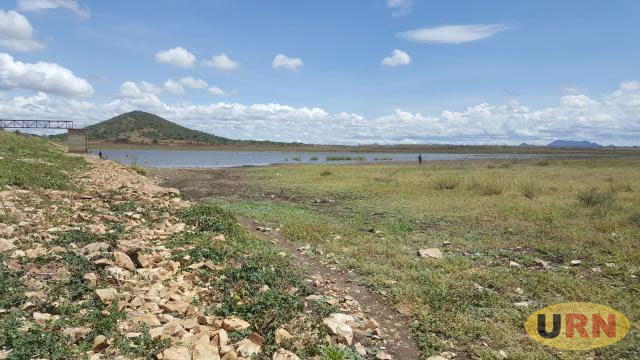
This year’s drought has tightened its grip earlier and harder than expected. With at least three more months before the next meaningful rains are forecast, the region’s vast rangelands, which account for 33 percent of Uganda’s total, lie exposed and brittle. Seasonal rivers have collapsed into dusty channels. Valley tanks have shrunk into muddy pits. And the once-reliable Kobebe Dam, a lifeline for both people and livestock, has dried up far earlier than usual.
Kobebe Dam is more than a local water source. It is a shared regional resource, sustaining cattle that move across porous borders between Uganda and neighboring Kenya. In Karamoja’s pastoral system, livestock mobility is not incidental; it is survival. When one grazing area fails, herders move. When one water source dwindles, animals trek for days in search of another.
The early drying of Kobebe has disrupted this delicate balance, forcing longer migrations westwards into crop-producing districts of Acholi, Lango, and Teso. Competition over land and water in these areas is intensifying. Crop destruction by livestock, disputes over wetlands and valley tanks, and long-standing grievances between communities are resurfacing. Local authorities in receiving districts face mounting pressure to manage relations between resident farmers and incoming pastoralists. What begins as an ecological crisis is steadily evolving into a security concern – tensions that may appear hostile on the surface, yet are fundamentally driven by survival.
Without water, livestock die. Without livestock, pastoral households lose not only food, but income, savings, insurance, and identity. In Karamoja, cattle, goats, and sheep are not mere commodities; they are the foundation of the economy and social system. Livestock deaths or distress sales weaken pastoral economies, reduce national production, and deepen poverty cycles. Protecting water infrastructure in Karamoja is therefore not simply a regional priority, it is a national economic imperative.
Karamoja accounts for approximately 25 percent of Uganda’s national livestock population and contains roughly one-third of the country’s rangelands. Earlier assessments show that the region contributes 39 percent of the national cow milk value, 27 percent of the national cattle offtake value for meat, 28 percent of the national goat milk value, and 47 percent of the national sheep offtake value.
In the FY 2018/19 alone, the combined physical outputs of meat and milk alongside the financial services livestock provide as credit and insurance were valued at approximately USD 444 million.
These are not marginal figures. Karamoja is not a peripheral contributor to Uganda’s livestock sector; it is a central pillar. When water sources collapse, the shockwaves extend far beyond the region. National meat supply chains tighten. Household incomes shrink. Livestock markets destabilize.
Today, across Karamoja’s dry rangelands, cattle ribs protrude sharply through thinning hides. Goats cluster around empty troughs. Herders dig into dry river and dam beds, scraping at damp sand in desperate attempts to create makeshift watering holes. The landscape tells a stark story: without sustained investment in water infrastructure and rangeland management, food aid will simply prolong suffering rather than resolve it.
Women bear the heaviest burden of this crisis.
In many Karamojong communities, women are responsible for securing water for drinking, cooking, washing, and caring for children. As nearby sources dry up, journeys lengthen. What was once a one-hour walk can stretch into a six-hour trek under blistering heat. Women and girls rise before dawn and often return after dark, balancing heavy jerrycans on their heads.
The consequences ripple outward. Girls miss school. Mothers lose time for income-generating activities. Physical exhaustion increases vulnerability to illness. As water points become scarcer and more crowded, risks of harassment and violence during long journeys intensify.
When livestock are driven further in search of pasture and water, men and boys often migrate with the herds, leaving women to manage households alone under worsening conditions. The drying of Kobebe Dam has therefore triggered not just an ecological emergency but a social one, deepening inequalities that are already entrenched.
Karamoja’s pastoral system has survived for generations through adaptation to climatic variability. Mobility, herd diversification, and communal resource management have historically allowed communities to withstand dry spells. But climate change has intensified the frequency and severity of droughts. Traditional coping mechanisms are now stretched to their limits.
With three more months of drought looming, rehabilitation of valley dams, borehole repairs, and strategic water harvesting must become central to the response. Long-term planning must prioritize sustainable water infrastructure that reflects pastoral mobility patterns rather than imposing sedentary assumptions on a mobile system.
The drying of Kobebe Dam is a warning signal. If a shared cross-border water resource of that scale can fail prematurely, what does that mean for smaller, less visible water points scattered across the region?
The answer is already visible in the absence of grass, in the dust-choked plains, in the concentration of livestock around the few remaining water sources. Overgrazing around shrinking water points accelerates land degradation, creating a vicious cycle: fewer water sources concentrate livestock, vegetation declines, and vulnerability to the next drought deepens.
The national conversation must therefore shift. Karamoja should not be framed solely as a recipient of aid, but recognized as a strategic economic zone whose livestock sector underpins a substantial share of Uganda’s food and economic security. Protecting water resources in Karamoja is not charity; it is economic prudence. A water-secure Karamoja would stabilize livestock production, strengthen household incomes, support women’s livelihoods, and safeguard national food security.
As the drought stretches on and rains remain months away, one thing is clear: restoring water systems must become the top priority.
The Ministry of Water and Environment should urgently de-silt and rehabilitate Kobebe Dam to restore its storage capacity while developing a structured, periodic maintenance plan for other valley dams and water sources across Karamoja. Beyond rehabilitation, government must invest in large-scale, climate-resilient water infrastructure, including dedicated livestock water facilities. Such forward-looking investment would reduce conflict, stabilize pastoral mobility, protect national livestock output, and ensure that when the next dry season comes, Karamoja is prepared and not abandoned to crisis once again.
*****
Richard Ayesigwa -Research Fellow –ACODE & Abura Vicky- Research and Advocacy Officer