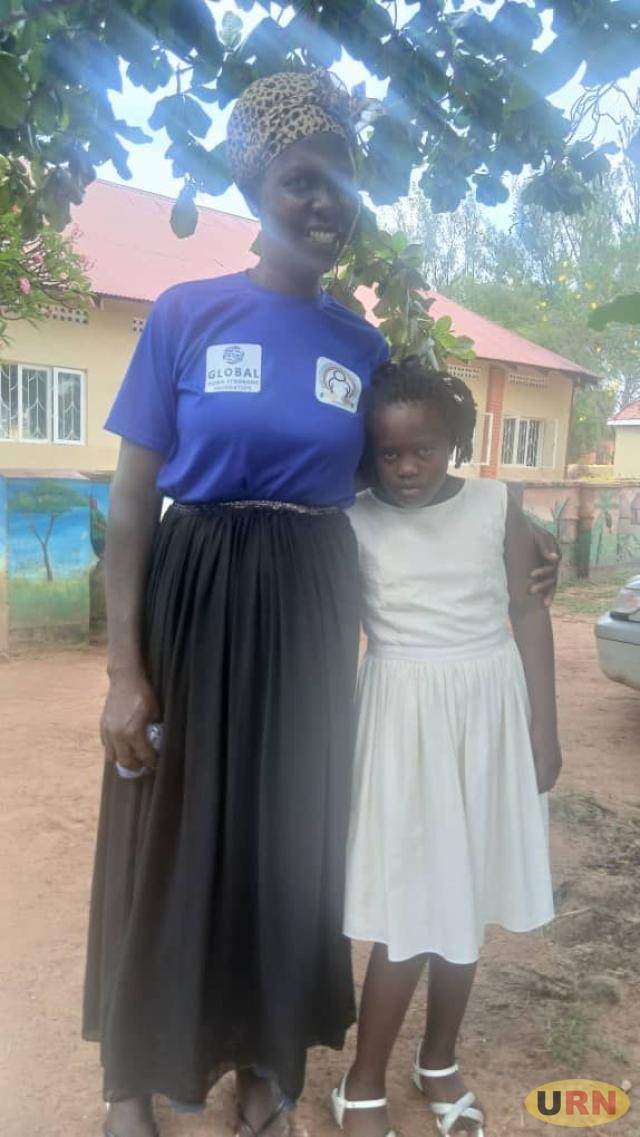
Soroti, Uganda | THE INDEPENDENT | In the quiet village of Oronyai in Dakabela, Soroti District, Anne Grace Arimi — known to her neighbours as Mama Jane — watches her daughter, Jane Frances, sweep the compound. To a casual observer, it is a simple chore. To Arimi, it is a hard-won victory in a country where children like Jane have long been forgotten.
Jane was born with Down syndrome, a genetic condition caused by an extra copy of chromosome 21. For Mama Jane, the diagnosis marked the beginning of a grueling journey defined by medical emergencies, financial hardship, and social stigma.
“When I gave birth, the child was not strong. Her legs were bowed, and breastfeeding was a struggle,” Arimi recalls. “It felt like her heart was over-pumping. We later discovered she had a heart defect.” Data from the 2024 National Population and Housing Census indicates that approximately 184,000 Ugandans are living with Down syndrome.
However, advocates like Michael Okiro Emadit, Country Director of the Down Syndrome Foundation Uganda (DOSFU), argue that the true number remains unknown due to underreporting and limited specialised research. In the Teso sub-region, where Mama Jane lives, the prevalence of developmental and mental health disorders stands at 16.4%, compared to the national average of approximately 13.2%. Yet specialised care remains concentrated in urban centres such as Kampala and Jinja.
“Raising a child with Down syndrome in Uganda is so expensive,” says Arimi. Frequent hospital visits for pneumonia and heart complications drained the family’s resources, especially after Jane’s father, an engineer, lost his job the year she was born. He has since passed away, leaving Arimi to navigate the challenges alone. Dr. Clare Amero of Katakwi General Hospital explains that while local facilities can identify the condition based on physical traits, they lack the equipment for karyotyping — genetic testing that is often done outside the country.
“Most children present with congenital heart disease,” Dr. Amero says. “We manage the symptoms and refer them to specialists in Jinja or Mulago National Referral Hospital, but the distance and cost are barriers for many families.” Jane was fortunate. Through the support of Chain of Hope, she travelled to Barcelona, Spain, for life-saving heart surgery — an opportunity unavailable to most Ugandan children.
Now in Primary One at St. Joseph Nursery and Primary School, Jane loves learning. “She dresses herself in her uniform and heads to school without even minding whether she has new books,” her mother says. However, inclusion remains complex. While many teachers and peers are supportive, Jane still experiences teasing from other children.
This reflects a broader national reality where children with disabilities are often viewed through a lens of pity or shame. The Down Syndrome Foundation Uganda is now spearheading the country’s first national training for midwives and doctors to improve early detection.“Midwives are the first people to touch these babies,” says Michael Okiro Emadit. “Many don’t know the signs. We are bridging a gap that has existed for a very long time.” Okiro is appealing to the government to establish a research centre dedicated to Down syndrome data and care, allocate land for specialised centres in regions such as Teso, and formally recognise March 21 as World Down Syndrome Day in Uganda.
In October 2011, Okiro represented Uganda as one of the signatories to a petition led by Andrew Boys of Down Syndrome International to the UN General Assembly, which declared March 21 as World Down Syndrome Day. As the sun sets over Oronyai village, Mama Jane has a message for other parents: “It is a condition you have to accept. They need more attention, but they can do so much. Jane bathes herself; she washes her clothes. Don’t give up on them.”
***
URN