Kampala, Uganda | THE INDEPENDENT | When Julius Nyanzi walks into a room filled with scientists, he does not begin with complex formulas or laboratory jargon. Instead, he starts with a simple but provocative idea: “Money grows on trees.”
For many, the phrase sounds like a joke or a cliché often used to caution children against extravagance.
But for Nyanzi, a Ugandan bio-researcher popularly known as Omukengfu, it is both a philosophy and a lived reality.
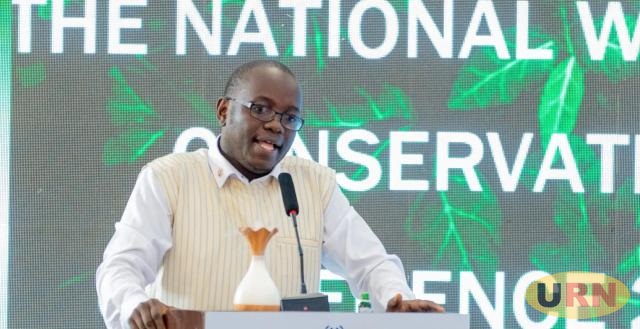
Standing before an audience of researchers and conservationists at the National Wildlife Conservation Conference 2026, Nyanzi shared a story that blends science, entrepreneurship, and Uganda’s vast natural wealth.
The conference, which was held under the theme “Medicinal and Aromatic Plants: Conserving Heritage, Health and Livelihoods,” was an opportunity for Nyanzi to speak with passion about plants and conservation.
His journey, from a curious student experimenting with plants to the founder of a thriving natural-products enterprise, offers a compelling lesson: Uganda’s indigenous plants hold enormous potential not only to heal ailments but also to improve diets, conserve biodiversity, and transform livelihoods.
“I’m a bio-researcher,” Nyanzi said with a smile.
“But most importantly, I am someone who believes that nature is a treasure we have not fully explored.”
Nyanzi traces the roots of his journey back to his university days studying ethnobotany.
While many students focused solely on academic work, he began experimenting with ways to turn plant knowledge into products people could actually use.
At the time, he was selling mushrooms at a university showcase, trying to earn a little income while studying. But the experience opened his eyes to a bigger opportunity.
“That’s when I realized there is money in the private sector,” he recalled.
“Science should not remain in books. It should solve problems and create opportunities,” said Nyanzi.
He later coined the name ProfBioResearch for his enterprise, an idea born out of both ambition and strategy.
The name combined “professional” and “bio research,” reflecting his dream of building a credible brand around plant-based innovation.
“The name you choose for your business is very important,” he told the audience. “Sometimes it becomes part of your identity.”
Today, ProfBioResearch has grown into a platform for developing natural products derived from Uganda’s plants, from perfumes and wellness products to insect repellents and essential oils.
One of Nyanzi’s earliest breakthroughs came while researching Stevia,a plant known globally as a natural alternative to sugar.
While studying ethnobotany, he began exploring stevia’s potential to address a growing health concern in Uganda, diabetes.
“When I researched stevia, I realized there was a big problem in this country,” he said. “People were dying from diabetes, yet we had a plant that could help.”
But turning that discovery into a business was far from easy. At one point, Nyanzi approached an exhibition organized by the Uganda Manufacturers Association to showcase the plant and its potential.
The organizers asked for $1,000 for exhibition space—an impossible sum for a second-year university student. “I pleaded with them,” he recalled.
“I told them this plant could change the country. But they didn’t listen.” Disappointed, he was about to leave when an unexpected opportunity appeared.
Veronica Namuangye, founder of Uganda Small Scale Industries, noticed his frustration and offered him a tiny display space, just enough to present his work.
That small chance changed everything. The first day, visitors ignored the green stevia seedlings he displayed.
Many simply didn’t understand the plant. So that night, Nyanzi dried the leaves in an oven, ground them into powder using a mortar and pestle borrowed from his mother, and returned the next day with ten different products. By the end of the exhibition, he had made one million shillings.
“That exhibition changed my life,” he said. “It showed me that innovation can create opportunity even when you start small.”
Nyanzi’s entrepreneurial instincts have led to some unusual moments, including one high above the clouds.
While traveling to Switzerland to explore patenting a mosquito repellent formula derived from natural oils, he carried several plant-based aroma products with him. During the flight, a bottle of lemon eucalyptus oil accidentally spilled, filling the cabin with a powerful fragrance.
Passengers began asking about the pleasant aroma. “I stood up and told them it was my product,” he said, laughing.
“Then they asked if I was selling.” Within minutes, he had sold about 20 units, earning roughly $1,000 before the plane even landed.
“I like to say I was the first Ugandan to make money on a plane,” he joked. That unexpected windfall later became the seed capital that allowed him to open his first shop at Equatorial Mall in Kampala.
Over the years, Nyanzi has expanded his work far beyond a handful of plant extracts.
Today, he says he has developed more than 1,000 products derived from nature, many focused on wellness, aromatherapy, and natural remedies.
Among the plants he frequently works with are eucalyptus, citronella, and cypress, species known for their medicinal and aromatic properties.
These plants grow widely across Uganda’s landscapes but remain underutilized. “We are gifted by nature,” he told the audience.
“When Winston Churchill called Uganda the Pearl of Africa, he was not mistaken.” “But we have not yet turned that natural wealth into products that can compete globally.”
For Nyanzi, linking conservation with economic opportunity is essential. When communities understand the value of indigenous plants, they are more likely to protect them rather than cut them down.
One of Nyanzi’s key messages is that farmers often overlook the economic value of plant by-products. Eucalyptus plantations, for example, are typically harvested only for timber after many years of growth. Yet the leaves themselves can produce essential oils used in cosmetics, pharmaceuticals, and insect repellents.
“An acre of eucalyptus can produce several jerry cans of oil,” he explained. “Each jerry can can sell for millions of shillings.”
That means significant value is often left behind in the fields. “How can someone leave 36 million shillings lying on the ground?” he asked.
Harvesting leaves for oil does not require cutting down the trees, allowing farmers to earn income while keeping forests standing.
To bridge this gap, Nyanzi trains farmers in distillation techniques and provides small machines that help them extract oils sustainably for export markets.
Listening from the audience was Maud Kamatenesi Mugisha, a renowned academic and Professor of Ethnobotany, Ethnomedicine, and Ethnopharmacology with more than two decades of research experience. Kamatenesi praised Nyanzi’s journey and encouraged younger scientists to learn from it.
“When we come to give presentations like this, we are giving knowledge free of charge,” she told participants.
“The younger generation can tap into it and become very rich, even billionaires.” She noted that senior academics take pride when their students translate scientific knowledge into real-world solutions.
“The professors who taught him may not necessarily be ahead of him in making money,” she said.
“And that is something we celebrate. We are happy when the younger generation innovates and becomes better.”
Drawing on her experience in the Natural Products Research Network for Eastern and Central Africa, Kamatenesi emphasized that plant science has long been undervalued despite its importance.
“In the past, people associated botany only with the herbarium or the museum,” she said. “They were excited to see animals in museums, but plants were ignored.” Yet, she added, Uganda’s cultures and traditions hold a vast repository of medicinal plant knowledge.
“There is a lot of knowledge in Uganda,” she said. “Our traditions have preserved many medicinal plants. If we document them properly, they can contribute greatly to health and economic development.”
The discussion also drew reflections from religious leaders. Father Fred Tusingire Atwoki, a Catholic priest from the Diocese of Fort Portal and a life member of Nature Uganda, attended the conference out of personal interest in plant conservation.
Tusingire said he was impressed by the expertise and practical work of the presenters.
“These are people who don’t only know,” he said. “They are also doing the work.”
He also addressed misconceptions surrounding herbal medicine and religion. Some Ugandans, he said, still seek herbal treatments secretly because they believe churches oppose traditional medicine.
“But herbal medicine itself is accepted,” he explained. “At least in the Catholic Church—and I believe in many other religions as well,”
Tusingire said, faith leaders could help spread awareness about the responsible use of natural remedies.
“In Uganda, people listen to religious leaders,” he said. “If they share this knowledge, it could help communities understand and protect the plants around them.”
As the conversation wound down, Nyanzi returned to the phrase that defines his work. “Money grows on trees,” he repeated.
But the real message behind those words goes beyond profit. It is a call for Ugandans, especially young scientists and entrepreneurs, to rediscover the value of indigenous knowledge and biodiversity.
Uganda’s forests, farms, and traditions hold countless plant species that can improve health, support nutrition, and create sustainable businesses.
“We should use our knowledge to create opportunities,” Nyanzi said. “That is how we inspire others and build a stronger country.”
For him, the future lies not only in laboratories or imported technologies, but also in the leaves, roots, and seeds that have grown in Uganda’s soils for generations.
And for those willing to explore them, he believes the possibilities are endless. “Nature has already given us the resources,” he said. “We just need the curiosity and the courage, to use them.
****
URN