Rising oil prices, disrupted air travel, and a shift in Sudan’s conflict
COVER STORY | IAN KATUSIIME | The US–Israeli war against Iran may be unfolding thousands of kilometres away, but its consequences are already being felt far beyond the Middle East.
For East Africa’s fast-growing economies—Uganda, Kenya and Tanzania—the conflict is far from a distant geopolitical drama. In an interconnected global economy, shocks travel quickly.
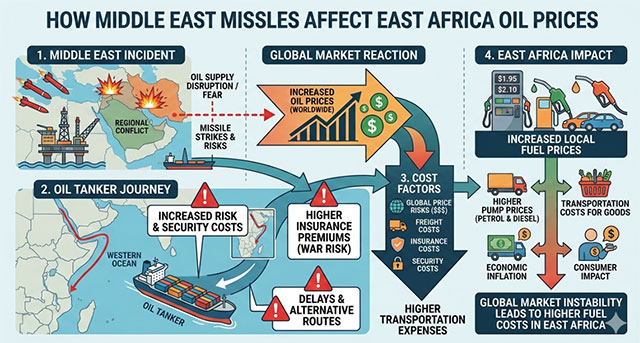
Oil prices are rising, with sharper increases expected as the Strait of Hormuz—one of the world’s most important energy corridors—remains closed. This narrow waterway, just 39 kilometres at its narrowest point, links the Persian Gulf to the Gulf of Oman and the Arabian Sea, carrying roughly a fifth of the world’s oil supply.
From there, tankers sail across the Indian Ocean toward East African ports such as Mombasa and Dar es Salaam and onwards to landlocked countries including Uganda, Rwanda and Burundi. Any disruption along this route quickly ripples through fuel-importing economies across the region.
An official from the International Maritime Organization told the BBC that over 20,000 ships are trapped in the blockade following Iran’s strikes on Saudi Arabia, the United Arab Emirates, Kuwait, Bahrain and Qatar. These attacks were reportedly in retaliation for the Gulf countries’ alliance with the US and Israel.
Together, the Gulf states produce roughly a third of the world’s oil—about 12 million barrels per day—underscoring the enormous influence they wield over global energy markets.
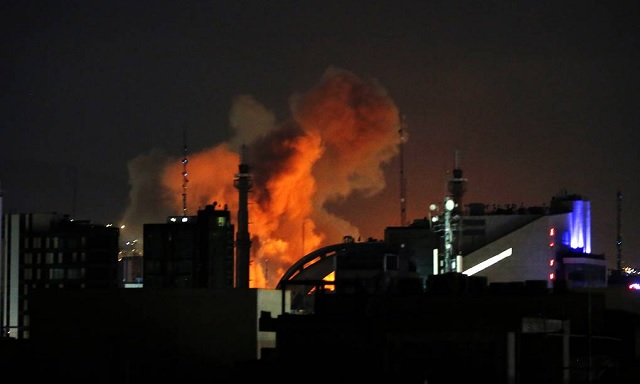
Saudi Arabia—the unofficial leader of the Gulf—accounts for an estimated 12% of global oil output. An Iranian drone strike hit the kingdom’s largest refinery at Ras Tanura, forcing a shutdown and raising fears of a global supply crunch. Pump prices are already soaring in Europe, and African countries are expected to feel the impact.
In Uganda, petrol prices could jump from the current Shs5,130 per litre to between Shs6,000 and Shs7,000 if the conflict escalates. Government officials, however, say mitigation measures are in place.
“At UNOC, we are working closely with our partner Vitol to mitigate disruptions and ensure an uninterrupted supply of petroleum products,” said Tony Otoa, chief corporate affairs officer at the Uganda National Oil Company (UNOC). He added that UNOC’s storage facilities in Jinja will help maintain steady supplies in the coming months.
Vitol, the world’s largest independent oil trader, partnered with UNOC in 2023 to streamline oil imports, cutting out Kenyan middlemen previously accused of extortion. Kenya is also preparing for potential supply shocks. The Kenyan Ministry of Energy and Petroleum said it has enough imports to cover the country through April, though analysts warn of broader ripple effects in the months ahead.
Transporters along the Northern Corridor—which stretches from Kenya to the DRC—are also set to raise costs. The Kenyan Transporters Lobby had already proposed increasing the cost of shipping a container from Mombasa to Kampala from $899 to $2,000 even before the conflict. With the war underway, the price hikes appear increasingly likely.
Air travel disruptions
The Gulf is a key destination for East African trade and tourism, but Iran’s strikes have forced Dubai International Airport—the busiest in the UAE with nearly 100 million passengers annually—to shut down. And labour export companies in Uganda and Kenya, which send roughly 200 workers per month to the UAE and Saudi Arabia, are already counting losses.
Limited flights have forced passengers to reroute via Europe, while Hamad International Airport in Doha has also closed its airspace. Multiple Emirates and Qatar Airways flights remain grounded, including at Entebbe and Jomo Kenyatta international airports. Emirates has suspended all flights to and from Dubai, while Qatar Airways will resume operations only when Qatari airspace is declared safe.
Qatar, a neighbour of Iran and host to the U.S.’s largest Middle East military base at Al Udeid, is strategically significant. Iran targeted the UAE due to its growing ties with Israel, including the 2020 Abraham Accords that normalized relations with Israel. These strikes have dented the UAE’s image as a stable business hub and disrupted global travel networks.
Historically, Iran and Saudi Arabia are rivals along Shia-Sunni lines, and their conflict has far-reaching implications for East Africa. Ugandan students in Iran are already affected: 43 engineering students were evacuated from Tehran on March 5 after a 48-hour journey via Turkey.
The operation was coordinated by Uganda’s Ministry of Foreign Affairs, Ministry of Defence, and the Uganda People’s Defence Forces (UPDF). Many students, however, remain trapped in Iran.
Turning point for Sudan war?
Analysts say the conflict could be a turning point for the civil war in Sudan, which has been sustained by the UAE. The UAE is the main funder of the Rapid Support Forces (RSF), the Darfur-based militia locked in a deadly battle for supremacy with the Sudanese Armed Forces.
RSF boss Hamdan Dagal, also known as Hemedti, is said to have established his headquarters in Dubai, where the RSF sells its gold and funds its war against the SAF led by General Al Burhan.
The civil war in Sudan, which marks three years in April, has caused 24,000 deaths and displaced 13 million people. Those fleeing the war have sought refuge in Uganda, Chad, Kenya, Ethiopia and South Sudan.
However, Uganda and Kenya have come under fire for their proximity to Dagalo. Kenya has hosted RSF and its allies in Nairobi as they formed a parallel government, while President Museveni has hosted Dagalo for talks several times, the latest being days before Iran sent drone strikes on Dagalo’s benefactor: UAE.
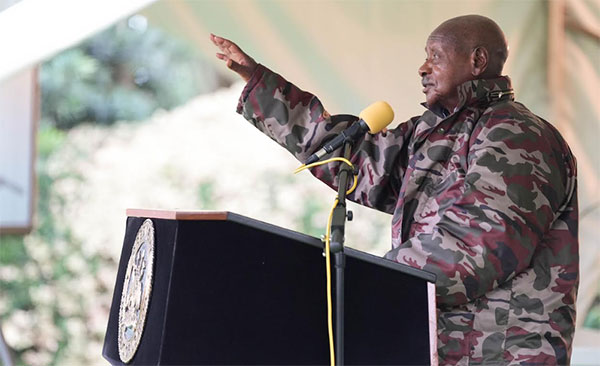
Museveni, however, said Uganda will not be dragged into the conflict. The President said he is still the chairman of the Non-Aligned Movement (NAM), adding that he stayed quiet when fighting broke out last year, though he later issued a statement.
NAM is a forum of 120 developing nations not formally aligned with any major power bloc, founded in 1961 to promote sovereignty, anti-colonialism, and independent foreign policies.
Museveni revealed his views while hosting an Iftar dinner for Muslims at State House, Entebbe, on March 5 as part of the ongoing Ramadhan period.
“What is happening in the Middle East is something we have discussed with the leaders there. All of them are our friends: Israelis, Iranians, UAE, Qataris, Saudis, and Americans,” he said.
“Netanyahu, who is a good friend of mine, has come here many times. We were here with him and the president of Sudan. We had a meeting here, and I asked him, “Why don’t you recognize the two-state solution?” Museveni said.
Financial burdens
As the United States and Israel intensify their strikes on Iran, with Tehran mounting defensive and retaliatory measures, Iran’s neighbours are increasingly being forced into difficult strategic decisions.
Military analysts warn that the financial burden of defending against Iran’s aerial assaults could be enormous, even for wealthy Gulf states such as the United Arab Emirates.
Intercepting incoming drones and missiles requires sophisticated defence systems, with each interceptor missile costing several million dollars, while many of Iran’s attack drones cost only tens of thousands of dollars. This stark cost imbalance means that defending against sustained barrages could quickly run into billions of dollars, putting significant pressure even on well-resourced economies.
The UAE has a GDP of US$569bn and is classified as an emerging market. It diversified from oil production to tourism, manufacturing, and financial services. When thousands of travellers were stranded at Dubai Airport after the strikes by Iran, the UAE Department of Culture and Tourism told hotel owners to grant extensions to their guests, and the department met the costs.
Commentators say the Gulf state may soon be forced to rethink elements of its foreign policy after being drawn into the latest escalation in the Middle East. In an article published in March 2025, Middle East Eye documented how Abu Dhabi had, over the years, cultivated what it described as an “axis of secessionists across the region”, stretching from North Africa to the Gulf.
“The RSF is but one of the nodes in a network of non-state actors the UAE has curated over the past decade. The small Gulf monarchy has tapped into secessionist causes from Libya to Yemen, Sudan and Somalia, using surrogates as Trojan horses to generate strategic depth and influence,” the publication wrote, referring to the Rapid Support Forces involved in Sudan’s civil war.
Military analysts say the United Arab Emirates will now have to invest heavily in advanced air-defence systems to guard against potential Iranian retaliation. The UAE is widely seen as a key strategic partner of the United States in the Middle East, and the country—roughly a third the size of Uganda—is among the region’s largest buyers of American military equipment.
Over the past three decades, the UAE transformed itself into a global business hub. During the 1990s and 2000s it emerged as a magnet for international finance, trade and tourism, cementing its reputation as a broker of multinational capital. Dubai, its most prominent city, earned the moniker “the Hong Kong of the Middle East”.
Yet that reputation has recently faced scrutiny after reports that the UAE had been bankrolling the Rapid Support Forces in the devastating civil war in Sudan.
For many residents, the prospect of conflict remains unfamiliar. Most people living in the UAE have never experienced war firsthand, as the country has long been viewed as a stable centre for business and tourism alongside Gulf neighbours such as Saudi Arabia and Qatar.
But the situation appears to be shifting. On March 6, the seventh day of the conflict, Al Jazeera reported that Dubai residents received alerts from the Emirati Interior Ministry urging them to take shelter from potential missile threats.