Kampala, Uganda | THE INDEPENDENT | Parliament’s Committee on Commissions, Statutory Authorities and State Enterprises (COSASE) has ordered the Departed Asians Property Custodian Board (DAPCB) to submit a full and clear list of all the properties under its control within weeks.
The directive follows growing concerns about fraud, missing records and long delays in selling or returning properties that were taken over more than 50 years ago after President Idi Amin’s 1972 expulsion of Asians from Uganda.
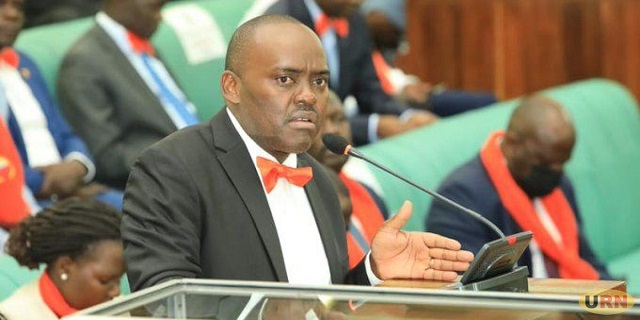
The committee, chaired by Mpindi Bumali, the central region representative of Persons with Disabilities, was reviewing the Auditor General’s report for the financial year ending June 30, 2024. The report pointed to serious weaknesses in the board’s work. Among the key problems raised were an incomplete asset register, properties that have never been valued, failure to hold regular board meetings, and weak supervision of the board’s main duties.
The Departed Asians Property Custodian Board was created under the Assets of Departed Asians Act of 1973 to manage and dispose of properties left behind after Amin expelled about 80,000 Asians. The law requires the board to keep proper records, value properties and sell them through open and fair processes. However, auditors found that many of these requirements have not been fully met.
The Board’s Executive Secretary, George William Bizibu, admitted that the board does not yet have a complete property register. However, he added that the delays are due to an ongoing verification and guidance from Parliament and promised that a new gazette notice will be issued before the board is wound up and that a full register will be published.
But some MPs were not satisfied. Richard Muhumuza Gafabusa, MP for Bwamba County, questioned how the board has been collecting revenue and selling properties without a verified list. “What did you gazette? Do you have an asset registry, and does it include values? What do you base disposals on?” he asked.
Bizibu said sold properties remain on the list until buyers’ complete payment. He also said the board had a work plan, even though it was not presented to auditors.
The audit also revealed that 115 properties that were compensated through the British High Commission in 1999 have still not been valued, while 87 properties compensated through the United Nations High Commissioner for Refugees (UNHCR) have not been sold.
These delays, some stretching over decades, increase the risk that the properties could be grabbed by third parties or claimed fraudulently. The report warns that this could lead to court battles and loss of government revenue.
Since the 1990s, Uganda has compensated owners for 344 properties through the United Nations. In 2025, the government began fresh verification of more than 200 claimants and gave them six months to prove ownership amid allegations of fraud, including double payments and illegal sales.
Juliet Kinyamatama, the Rakai Woman MP, called for greater transparency. “Can we see evidence of the process? It must be agreed upon by the board so we can hold you accountable,” she said.
Francis Mwijukye, the MP for Buhweju County, warned about ghost claimants and questioned whether ministers had donated properties outside agreed procedures. To this, Bizibu admitted that there have been instances where ministers used their powers to donate properties, but he did not provide details.
The law requires the board to meet every month. However, during the period under review, the board met only once, on July 29, 2023. Handwritten notes in the audit blamed ministers’ busy schedules. MPs said this shows weak leadership and poor governance.
A previous winding-up plan was drafted in 2021-2022, but no progress has been made since. Parliament has also halted the government’s rationalisation plan because of unresolved property cases.
For many Ugandans, these properties represent untapped economic value. But without a clear and verified register, there is a risk of theft, wrong allocations and continued corruption. Bizibu told the committee that Parliament had insisted the board cannot be wound up without a clear inventory.
*****
URN