Kampala, Uganda | THE INDEPENDENT | Civil society organisations have urged the government to swiftly intervene and curb ever-increasing drowning deaths.
Global Health Advocacy Incubator (GHAI), Design Without Borders (DWB), and Makerere University School of Public Health (MAKSPH) say the more than 3,000 deaths by drowning that Uganda records every year can be reduced by taking basic measures such as subsidizing the cost of life jackets.
Denis Nkurunziza, an expert in water safety gear, said standard and internationally recommended life jackets cost no less than 200,000 shillings. He noted that many people in fishing communities and daily users of water as a means of transport cannot afford such costs, yet they need protection.
“Life jackets that can keep you floating with your face facing the sky are a bit costly, and many people cannot afford them. We have children and adults who regularly travel on water to go to school, to work, or to seek medical services. Such people cannot afford a life jacket costing 200,000 shillings,” Nkurunziza said.
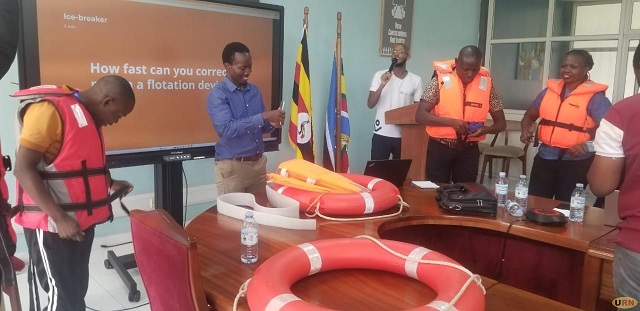
CSOs believe that if the government intervenes by reducing taxes on the importation of life jackets and other gear, or by empowering people to manufacture them locally, the prices can become more affordable. Nkurunziza was speaking at ongoing training sessions for media practitioners on how to prioritize drowning as a health problem rather than treating it as an event-based occurrence.
GHAI’s Media Coordinator, Charles Okao, said many media houses in Uganda have consistently reported drowning as an event-based issue. According to Okao, when the media does not prioritize drowning as a public health problem, authorities in the country do not take it seriously, yet losing eight lives to water every day is too much to ignore.
“The purpose of this training is to ensure that journalists start seeing drowning as a health problem rather than isolated occurrences,” Okao said. “They need to see drowning as a problem that concerns everyone and requires urgent attention in order to reduce the deaths. This can be done by going beyond reporting events and instead telling the impact and implications of every drowning incident.”
Nkurunziza and Otta Businge, a researcher from MAKSPH, said there should be programs aimed at teaching swimming and survival skills to people whose lives depend on water, such as children and communities around landing sites.
Businge also called for sensitization of homeowners and schools with swimming pools on how to construct them safely, since many children die in such water bodies. According to Businge, children have often drowned in places about 500 metres from their homes, such as swimming pools, open ponds, or shadoofs.
“It is important to ensure that parents or guardians equip caretakers with the necessary rescue and swimming skills to save children in case they accidentally fall into swimming pools,” Businge said. “Such places, including ponds used for brick making need to be covered at all times.”
Businge, Nkurunziza, and Okao said the 3,000 deaths resulting from drowning are preventable if there is goodwill. The trio added that since the circumstances under which people drown are known, it is easier to prevent such occurrences.
****
URN