Lira, Uganda | THE INDEPENDENT | Resident District Commissioners (RDCs) in the Lango sub-region have been urged to actively participate in district planning meetings to strengthen monitoring and oversight of government programmes.
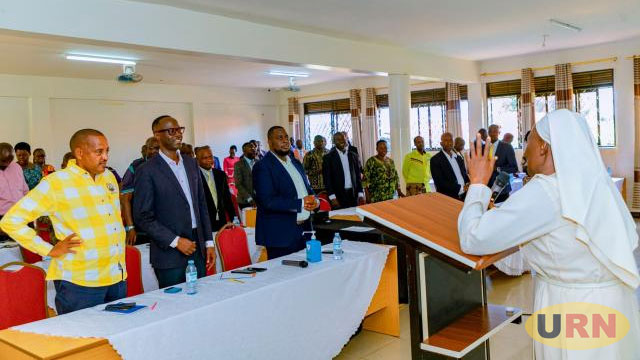
The call was made at the closing of a three-day capacity-building training that brought together Resident City Commissioners (RCCs); RDCs, their deputies and assistants, as well as District Internal Security Officers (DISOs) and Resident Internal Security Officers (RISOs) from across the sub-region. The training focused on improving coordination and enhancing oversight of government programmes at the district level.
In a message delivered on his behalf by Lt. Col. (Rtd) Kibrai Mbako, Yunus Kakande, the Permanent Secretary in the Office of the President Uganda, said the government continues to invest substantial resources in priority sectors such as agriculture, infrastructure development, education, health services and wealth creation initiatives aimed at accelerating socio-economic transformation across the country.
Kakande cautioned RDCs against relying solely on reports from Chief Administrative Officers (CAOs), emphasizing that RDCs and district security leaders serve as a critical link between the central government and local authorities.
He said they should actively participate in key district processes to ensure proper monitoring and accountability.
“RDCs therefore have a critical responsibility to convene coordination meetings and ensure that all government actors within the district operate in a complementary and harmonised manner,” he said.
He also tasked security officials to revive grassroots security structures at parish and village levels to improve information flow and help identify gaps in service delivery.
Meanwhile, Mary Grace Akiror, Deputy Head of the RDC Secretariat, also urged RDCs to actively take part in district and city planning processes to make monitoring easier during programme implementation.
She noted that some RDCs miss critical information because they fail to attend planning meetings.
“The biggest mistake that RDCs make is to think that they are too big to sit in some of the district planning meetings. In the end, they complain that they are being left out,” Akiror said.
She further criticised some RDCs for failing to highlight key issues such as staffing gaps, planning challenges and corruption in their reports.
Earlier, Samuel Odongo, the Deputy RDC of Kole District, said staffing shortages continue to hinder effective monitoring of government programmes.
He explained that many senior positions in districts are currently held by officers in acting capacity, which makes it difficult to properly evaluate their performance and enforce accountability.
Meanwhile, Francis Abhengana, the Assistant RDC of Oyam District, called on the Office of the President Uganda to pay closer attention to the conduct of Chief Administrative Officers at the district level, particularly regarding the operations of District Service Commissions. He said many recruitment processes in districts are marred by corruption, which undermines the effective implementation of government programmes.
Participants at the training were also introduced to new approaches aimed at improving coordination, monitoring, evaluation, security and service delivery in government institutions.
The session further highlighted the Agricultural Credit Facility and reviewed progress in implementing the 2021–2026 government manifesto in the Lango Sub-region.
******
URN